



How to Fix Splintering Deck Boards?
Why Do Wooden Deck Boards Splinter Anyway?
Weather Exposure
Lack of Sealing
Age and Wear
Poor Quality Wooden Deck
Not all wood is created equal. Softer woods are more prone to splintering than high-quality, dense hardwoods. The initial cost savings can lead to more maintenance and repair costs down the road.
Repair or Deck Replacement?
So, you’ve got splintering deck boards. What’s the next step? The right solution depends on how widespread the problem is. You need to figure out if you’re dealing with a few problem spots or a systemic issue across the entire deck surface. Also, the decision for repair or replacement also depends on what kind of deck or fence materials you are dealing with.
When to Repair Your Deck Boards
If your deck is in pretty good shape overall and you only have a few splintered areas, a repair might be all you need. This is a cost-effective solution that can add a few more years to your deck’s life. A good candidate for repair usually has:
- Localized Splintering: The damage is contained to one or two boards.
- Solid Foundation: The posts, joists, and underlying structure are still strong and show no signs of rot or mildew.
- Minimal Cracks: Aside from the splintering, the boards are not deeply cracked or warped.
When to Consider Deck Replacement
If your old deck is showing its age in multiple ways, a full deck replacement might be the smarter long-term investment. It might be time to replace if:
- Widespread Splintering: More than 20-25% of all the boards are splintered, cracked, or warped. At this point, trying to fix each board individually becomes time-consuming and expensive.
- Structural Issues: You notice soft spots when you walk on the deck, or the posts and support beams show signs of rot. Structural integrity is non-negotiable, and this is a major safety concern.
- Constant Maintenance: If you find yourself making repairs every year, you’re likely spending more money and effort than a new deck would cost over time.
Professional Solutions for a Splintering Wood Deck
An unprofessional job can make the problem worse or even damage the wood permanently. Here’s how professionals handle it, ensuring a smooth, safe, and long-lasting surface:
Targeted Repairs for Minor Splintering
First, the splintered areas are thoroughly cleaned with a wire brush to remove any loose wood fibers. If the splinters are deep, we might use a specialized wood filler to fill the cracks and gaps. The key is to use a high-quality, sandable wood filler that flexes with the wood. Once the filler is dry, the area is carefully sanded to create a smooth surface that blends with the rest of the board.
Another option is flipping boards. If a board is splintered on top but the underside is in good shape, we can sometimes unscrew it, flip it over, and refasten it. This is a cost-effective trick, but it only works if the board isn’t warped and the underside is genuinely sound. A professional can tell you if flipping is a viable option for your deck.
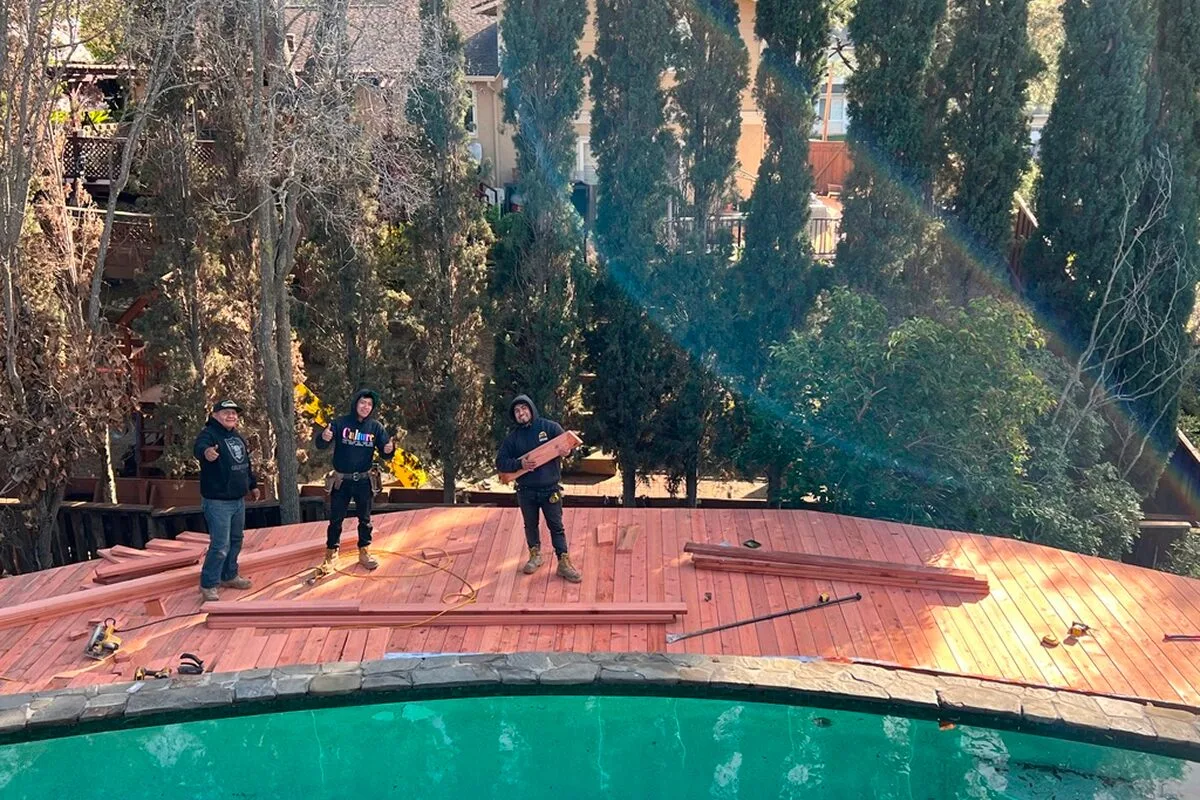
Refinishing
For more widespread, but still superficial, splintering, a full deck refinishing is the way to go. This is a multi-step process that restores the entire deck surface. This is not a simple weekend task; doing it right takes time and the right equipment.
1. Deep Cleaning
2. Professional Sanding
This is where the magic happens. To get a truly smooth surface, a large floor sander and professional sanding are often necessary. These powerful machines can take off the damaged top layer of the wood, revealing the fresh, bare wood underneath.
Handling a rented drum sander without experience is risky: it’s easy to create dips and uneven spots. Our team uses professional-grade sanders to ensure a uniform, flat surface across all the boards. For edges and hard-to-reach spots, we use smaller, detailed sanders.
3. Staining and Sealing
Conclusion
Fixing splintering deck boards is about keeping your outdoor space safe. Minor splinters can often be handled with targeted repairs or refinishing, but bigger structural issues call for a full replacement to protect your investment.
If you’re unsure which direction to take, bringing in a professional is the smartest move. A trained eye can quickly spot what’s salvageable, what isn’t, and how to restore your deck without causing further damage.
Upgrade Your Outdoor Space With a New Fence or Gate
If your deck is showing wear, chances are your fence or gate might be, too. At FCR Fence & Deck, we help homeowners turn worn-out yard boundaries into beautiful structures built to last. Our team takes care of everything from start to finish. Other than this, we offer arbor and trellis designs, composite deck installation, and much more to create the best outdoor space for summers and winters. Contact FCR Fence & Deck today to schedule a consultation.