




Preventing Mold on Wooden Decks
Why Does Mold Attack Your Wood Deck?

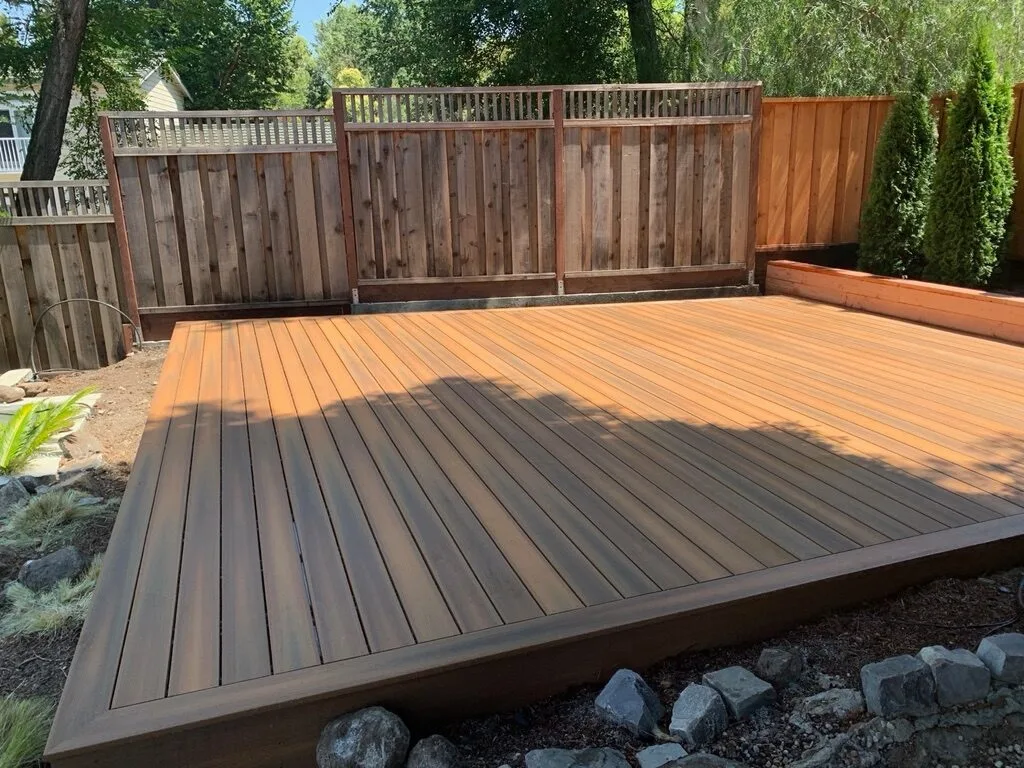
Daily Habits to Prevent Surface Mold Growth
Sweep Your Deck Regularly
Manage Surrounding Plants
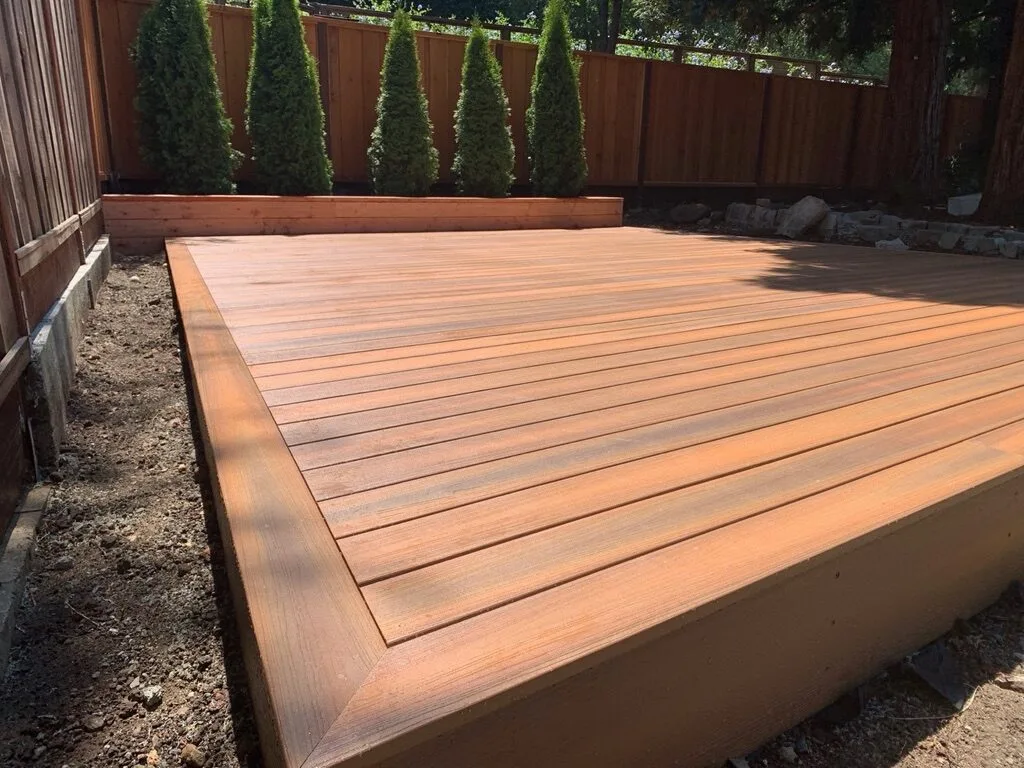
Check Your Drainage
Standing water = a drainage issue. This could be due to sagging joists or debris clogging the gaps. Make sure that your gutters aren’t overflowing onto the deck, as this concentrates water in one spot, accelerating mold growth.
How to Clean Mold from Deck Boards?
Removing mold is straightforward if you do it right. But doing it wrong can damage the wood.
Don't Use Bleach
Many homeowners instinctively reach for household bleach to kill mold. The problem here is: it doesn’t penetrate deep enough to kill the roots hidden in the porous wood. Plus, bleach breaks down the lignin in wood fibers, which can cause the surface to become fuzzy over time. Read our guide to choose the best fencing materials.
Using a Deck Cleaner
Instead of bleach, use a sodium percarbonate-based cleaner (often called oxygen bleach). When mixed with water, it creates an effervescent reaction that helps lift mold and dirt out of the wood grain without damaging the fibers. Here are the steps:
- Remove all furniture and sweep away loose debris.
- Mix your deck cleaner according to the instructions. Apply it generously to the dry deck surface.
- Let the cleaner sit for 10-15 minutes. You want it to penetrate deep to kill mold spores hiding below the surface.
- Scrub with the grain of the wood, not against it. This mechanical action is necessary to dislodge stubborn mold.
- Thoroughly rinse the deck with a garden hose.
Using a Power Washer
You’ll often hear conflicting advice about using a power washer (or pressure washer) on wood. The truth? It’s a powerful tool, but dangerous in the wrong hands.
If you blast your deck with 3000 PSI, you will strip the mold, but you’ll also strip the soft wood fibers, leaving the boards raised and splintery.
If you choose to use a pressure washer to clean mold:
- Set the machine to the lowest setting, ideally between 1200 and 1500 PSI.
- Never use the pinpoint red tip.
- Use a 40-degree or 25-degree fan tip to disperse the water.
- Hold the nozzle about 12 inches away from the surface.
- Don’t let the stream linger in one spot.
- Keep the wand moving in a sweeping motion with the grain.
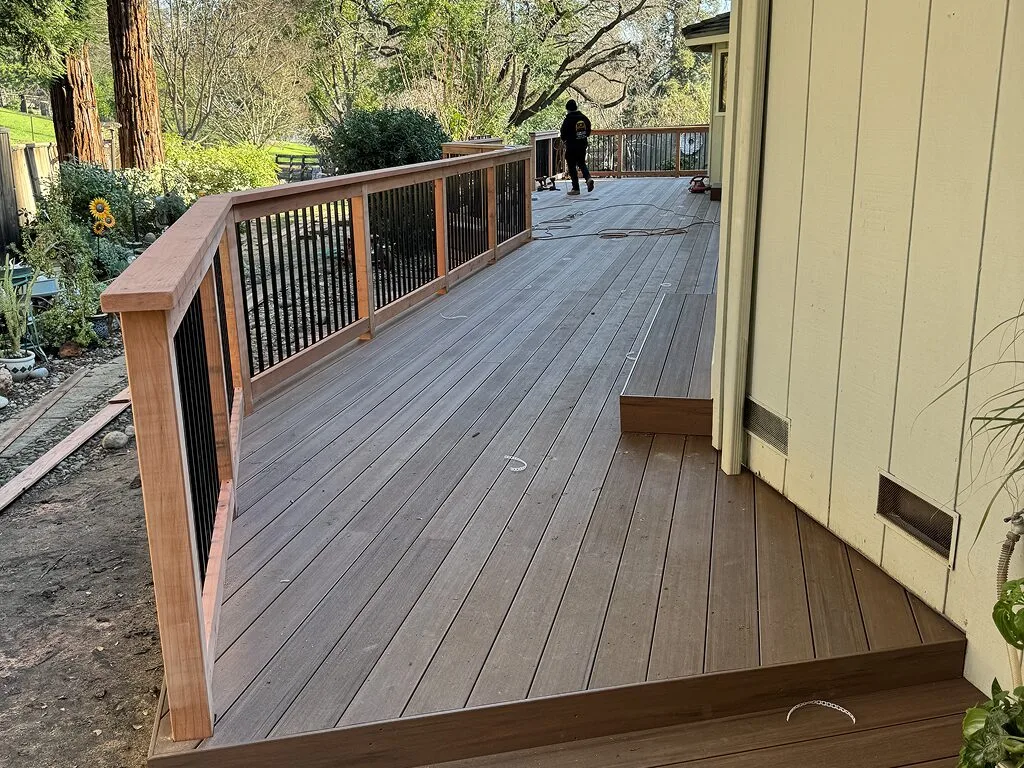
Sealing
Ventilation
Moisture rising from the ground needs to escape. If you have skirting around your deck that blocks airflow, you are creating a humid environment perfect for mold. The key here is: Improve air circulation:
- Gaps: Ensure there are gaps in your skirting or lattice to allow cross-ventilation.
- Spacing: When installing decking boards, proper spacing (usually 1/8 to 1/4 inch) is critical to let water drain and air flow through.
- Ground Cover: If the ground under your deck is constantly wet, consider adding gravel or a plastic vapor barrier to keep ground moisture down.

Conclusion
Keeping your deck mold-free isn’t about performing miracles; it’s about moisture management. A little bit of preventative maintenance ensures your outdoor space remains a safe, beautiful place to relax, rather than a slippery, green headache. So, grab that broom, check your drainage, and enjoy your deck this season.
Protect Your Outdoor Space with FCR Fence & Gate
A strong, well-built fence and gate system is more than a boundary: it’s the backbone of your property’s curb appeal, security, and long-term value. And at FCR Fence & Deck, we build fences and gates that are made to handle weather, moisture, daily wear, and everything in between.
From privacy fences built to block wind and weather, to modern gates designed for smooth, daily operation, we tailor every project to your home and your environment. Ready to upgrade your property with fencing and gate installation that holds up season after season? Contact FCR Fence & Deck today!