



What Are the Different Types of Deck Railing?
Deck railings come in wood, composite, wrought iron, and steel, and each type differs in cost and maintenance. Installed prices range from about $30 to $120 per linear foot or more.
The most popular types covered in this guide:
- Redwood railing
- Composite railing
- Wrought iron and steel railing
Railing is required on decks more than 30 inches above grade. We prepared this guide for homeowners choosing deck railing options for a new deck or replacing old porch railings.
Comparing Deck Railing Materials
| Railing Type | Installed Cost per Linear Foot | Maintenance |
| Wood | About $30 and up | Restain or paint every 2 to 3 years |
| Composite | $50 to $110 | Clean with soap and water |
| Wrought iron | $50 to $120 | Touch up scratches in the black powder coat |
Note: Stairs, corners, gates, and Bay Area labor rates can raise the final price.
Deck Railing Parts
Every deck railing system uses the same basic parts, whatever the material:
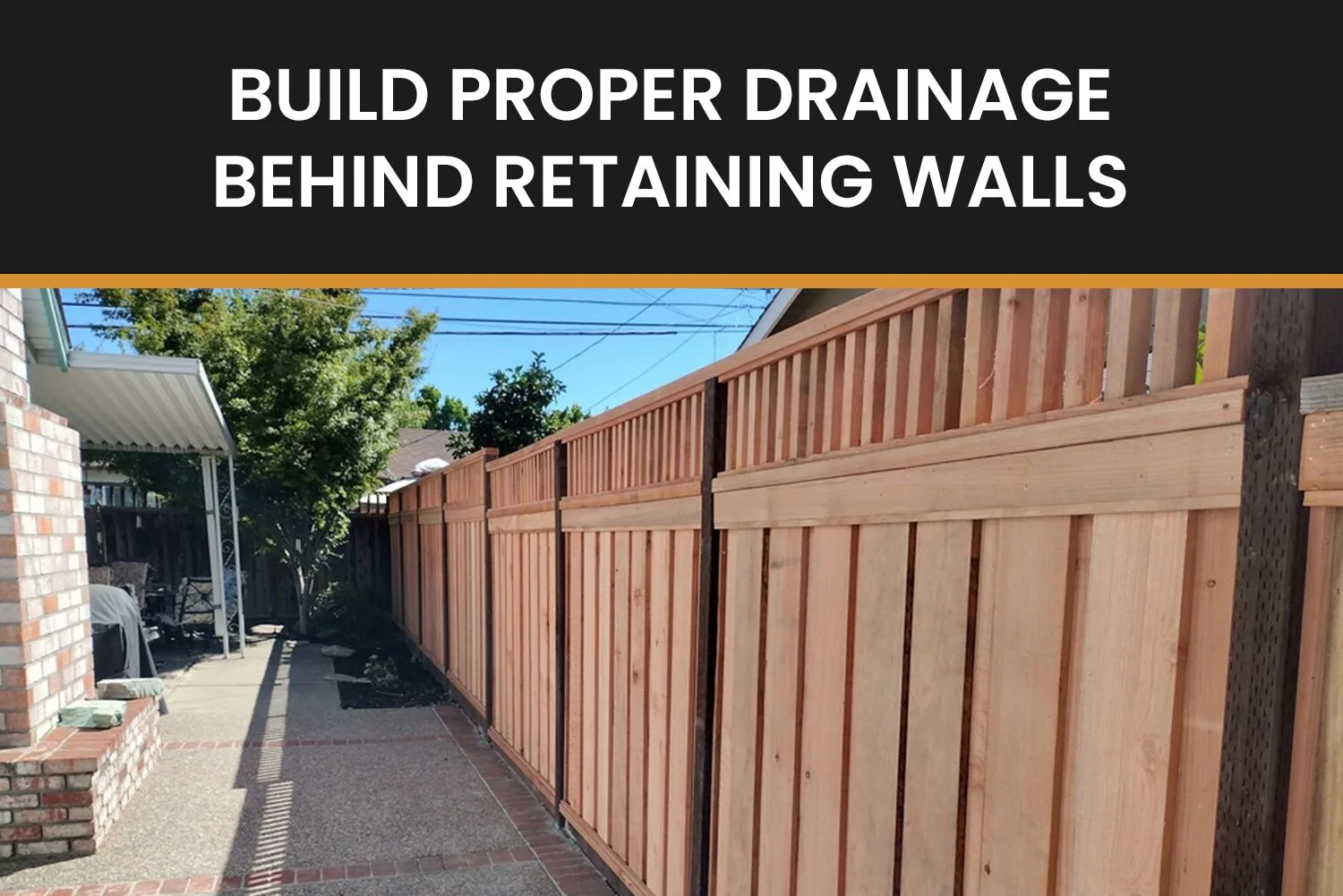
- Posts: Space wood railing posts no more than 6 feet apart. Composite and steel systems follow the manufacturer’s maximum span.
- Top rail: It must resist a 200-pound load applied in any direction under the building code.
- Bottom rail: The bottom rail sits no more than 4 inches above the deck surface.
- Balusters: They fill the space between rails. Space them so a 4-inch sphere cannot pass through.
- Post caps: These caps seal the post tops and keep water out of the end grain.
Redwood Railing
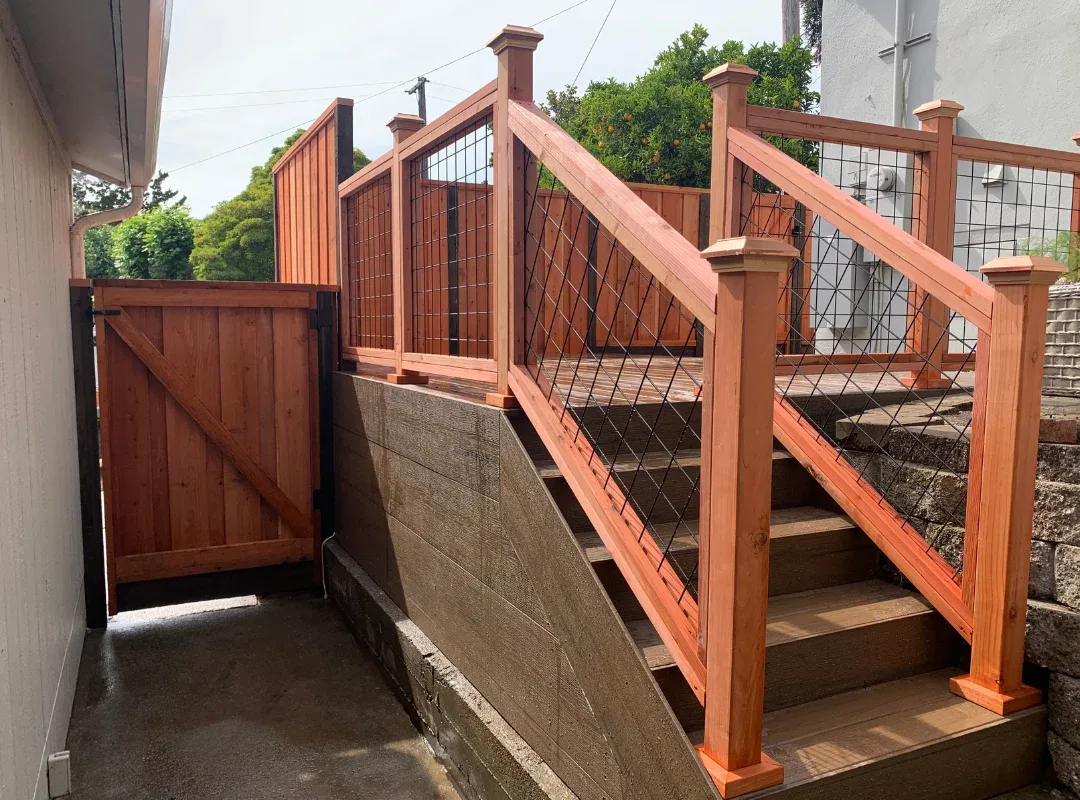
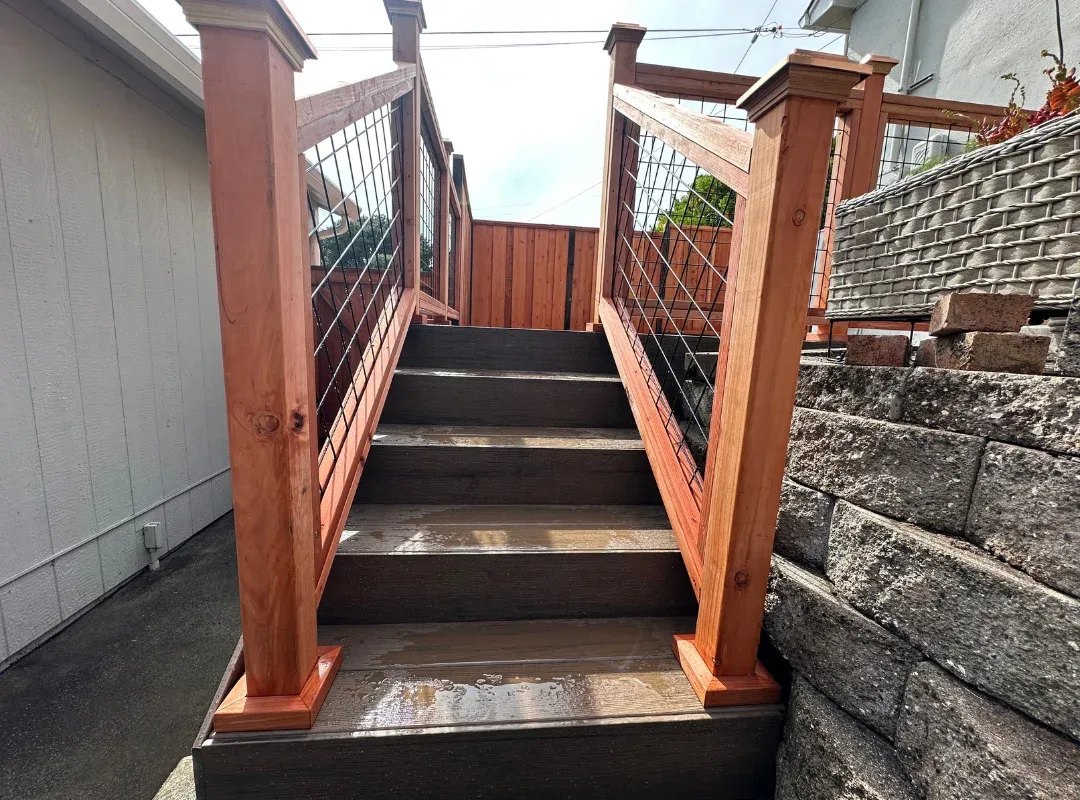
Redwood railings are built with top and bottom rails and traditional balusters. Redwood heartwood contains natural tannins that resist rot and insects.
You can stain or paint redwood railings to match your home. Restain or repaint every 2 to 3 years to protect the wood from moisture and sun.
Composite Railing Materials
Composite railing mimics the look of real wood while requiring less maintenance. Many composite railing systems use a metal core inside the rails for added strength. The railing can match the color of your composite decking.
Composite railing generally costs more upfront than wood. In return, composite railings can last over 30 years with minimal maintenance, like cleaning with soap and water.
Wrought Iron & Steel Railing
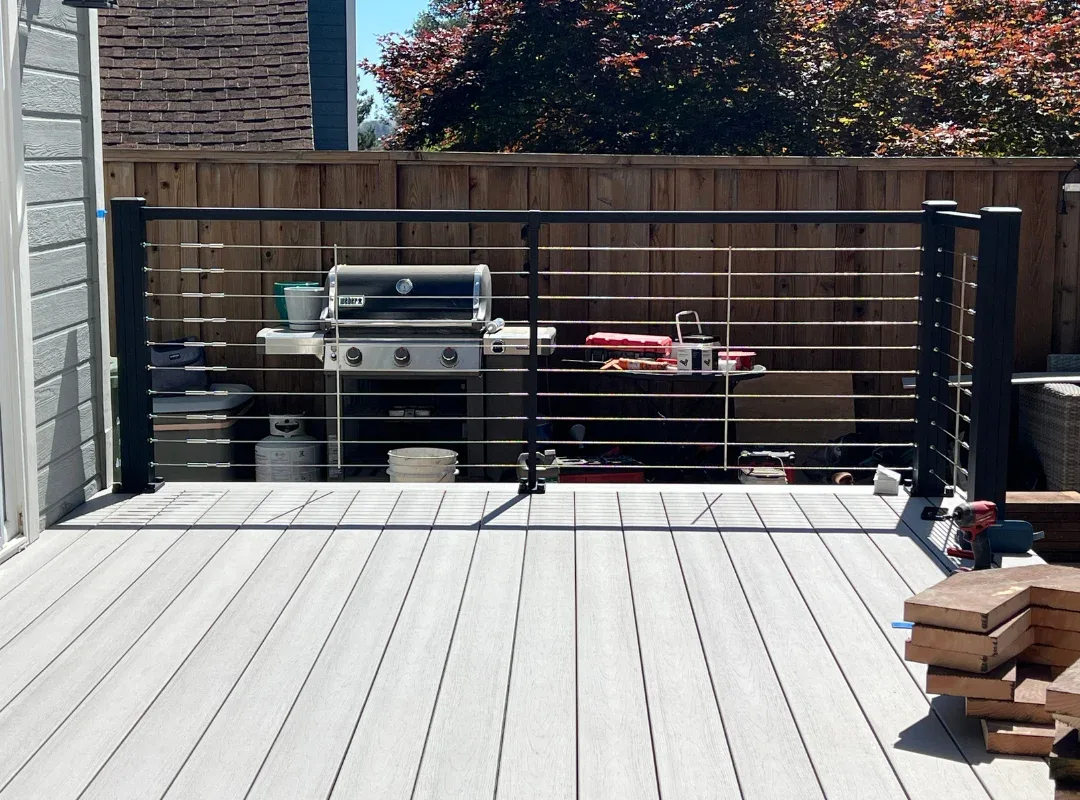
Metal railing offers exceptional durability but needs a protective finish and periodic touch-up paint to prevent rust. Wrought iron offers decorative scrolls and custom patterns for traditional homes.
Steel railings are durable but prone to rust without treatment, so they need a black powder-coated finish. Custom iron railings can match gates and fences on the same property for a consistent style.
Deck Railing Code Requirements in California
The California Residential Code sets the rules for residential deck railings:
- Guardrails are essential for a deck surface more than 30 inches above grade.
- Residential guardrails must be at least 36 inches high. Multi-family and commercial decks follow the California Building Code, which requires 42 inches.
- Openings must not allow a 4-inch sphere to pass through.
- On the open sides of stairs, openings must not allow a 4 3/8-inch sphere to pass through.
- The triangle formed by a stair riser, tread, and bottom rail must not allow a 6-inch sphere to pass through.
Most attached and elevated decks need a permit, and the inspector checks railing height and spacing before final approval.
Stair Railings & Handrails
Deck stairs with four or more risers need a handrail. Set the handrail 34 to 38 inches above the stair nosing, measured vertically. Use a graspable profile: a round handrail must be 1 1/4 to 2 inches in diameter.
Run the handrail continuously for the full length of the stairs, and end it at a post or return it to the wall. A redwood or black steel handrail can match the deck railing for a consistent look.
Choosing the Right Railing for Your Outdoor Space
Match the railing to how you use your outdoor space:
- Open views: Wrought iron or steel railing
- Lowest upfront cost: Redwood railing
- Least maintenance: Composite railing
- Traditional homes: Redwood, composite, or wrought iron
- Modern homes: Black steel railing
Every railing must meet code for safety. Confirm the height rule with your city, since requirements vary by jurisdiction.
How Much Railing Does Your Deck Need?
To estimate railing length, add up the deck’s open sides and subtract the stair opening.
Example: A 16-by-20-foot deck attached to the house along its 20-foot side has three open sides: 16 + 20 + 16 = 52 linear feet. Subtracting a 4-foot stair opening leaves 48 linear feet of railing.
At installed prices per linear foot, 48 feet of railing costs:
- Redwood: from about $1,440
- Composite: $2,400 to $5,280
- Wrought iron and steel: $2,400 to $5,760
Price stair railings separately, since each stair side adds its own length.
How to Maintain Deck Railings
Regular maintenance keeps railings safe and extends their life:
- Push on each post every spring. Tighten the through-bolts on any post that moves.
- Clean redwood railings and restain them every 2 to 3 years.
- Wash composite railings with soap, water, and a soft brush twice a year.
- Touch up scratches in black powder-coated iron and steel right away to stop rust from spreading.
- Replace cracked balusters and loose post caps as soon as you find them.
Add Deck Railing with FCR Fence & Deck
FCR Fence & Deck is a licensed, bonded, and insured contractor (Lic. #962764) serving Martinez and the East Bay. Our team builds wood and composite decks with code-compliant railing designs, and our custom iron fabrication creates railings and gates that match your home. Request a free estimate today. Call (925) 655-7528 or email office@fcrfenceanddeck.com.
Frequently Asked Questions
1. What type of deck railing is best?
Composite railing is the best all-around choice for composite decks, since it matches the decking and needs only soap-and-water cleaning. Choose redwood for the lowest upfront cost, or wrought iron for durability and open views.
2. What deck railing lasts the longest?
Wrought iron and steel railings with a black powder-coated finish last the longest, often 50 years or more. Composite railings can last over 30 years, and redwood lasts 15 to 30 years with regular staining.
3. What is the easiest deck railing to install?
Composite railing systems with pre-cut rails and post sleeves are the easiest to install. Redwood railing is also simple with standard tools. Custom iron railing takes the longest, since each section is fabricated to measure.
4. Which is better, redwood or composite deck railing?
Redwood costs less upfront, starting at about $30 per linear foot, but needs restaining every 2 to 3 years. Composite costs $50 to $110 per linear foot and needs only occasional cleaning.
5. What are the latest railing design trends?
Current trends include black powder-coated steel, horizontal redwood infills, wide drink rails, and lighted post caps. Mixed materials, such as redwood top rails on black steel railing, are also popular.