



How to Remove Mold Mildew Before Restaining Wood
Wood decks, pergolas, and fences take a beating from shade, moisture, and seasonal humidity. Left alone, that moisture invites problems. Green fuzz creeps along the grain. Dark patches form. What looks like weathering is something more stubborn, and applying fresh stain over it is one of the worst things you can do. The new stain will peel and fail within months. That is why learning how to remove mold and mildew before retaining wood is not optional; it is the foundation of a lasting finish. Let’s know more.
Why Mold & Mildew Must Be Removed First
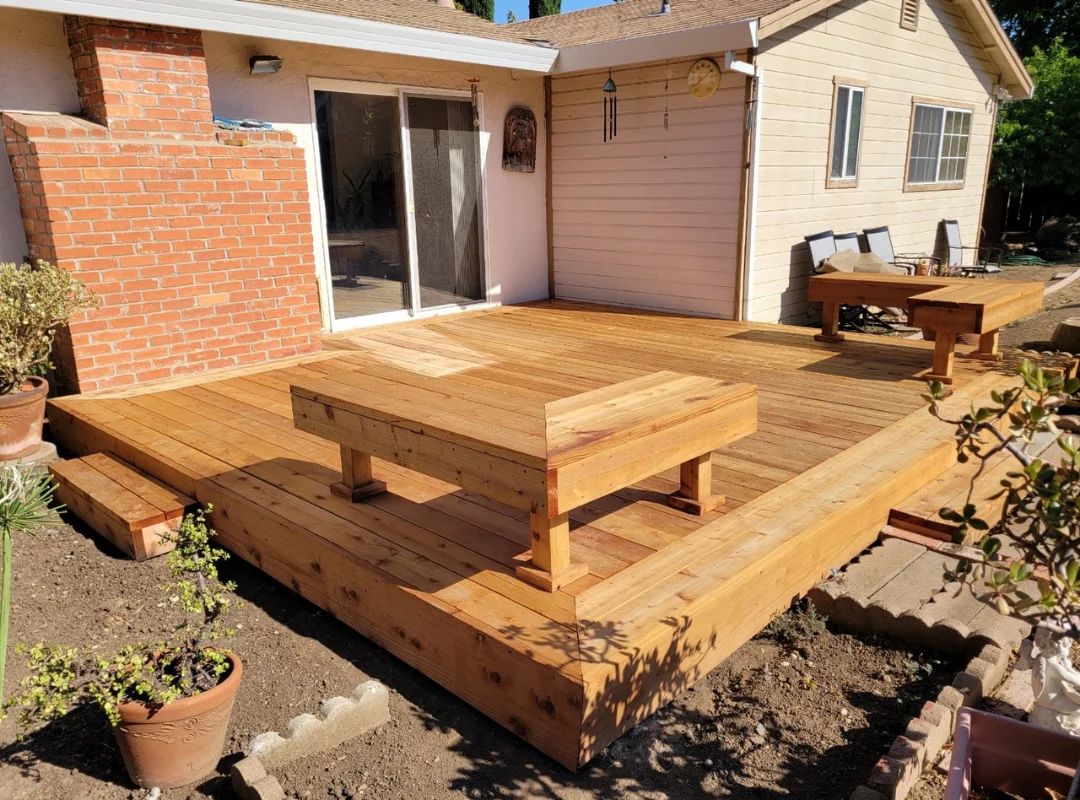
Stain does not bond to contaminated wood. It bonds to the wood surface itself. It bonds to the actual fiber, open grain, and pores. When mold spores or mildew growth sit on that surface, they create a barrier.
The stain sits on top of the contamination instead of penetrating the wood. The result is peeling, flaking, and a finish that looks worse than what you started with after just one rainy season.
Removing mold is only half the battle. Learn about preventing mold on wooden decks so you’re not repeating the cleaning and restaining process sooner than necessary.
Identifying What You Are Dealing With
Keep in mind that not every dark stain is mold, and not every fuzzy patch is mildew.
Mildew stains tend to be powdery, flat, and gray or white. They sit on the surface and are easy to scrub off.
Mold, particularly black and green mold, has a raised or fuzzy texture and can penetrate deeper into the wood grain.
Check your outdoor living spaces closely before you reach for any cleaning solution.
- Shaded areas
- Spots near planters
- Sections of treated wood that stay damp longer
- All these are the most likely locations for mildew growth to take hold. Anywhere direct sunlight rarely reaches is a prime target.
What You Will Need Before You Start
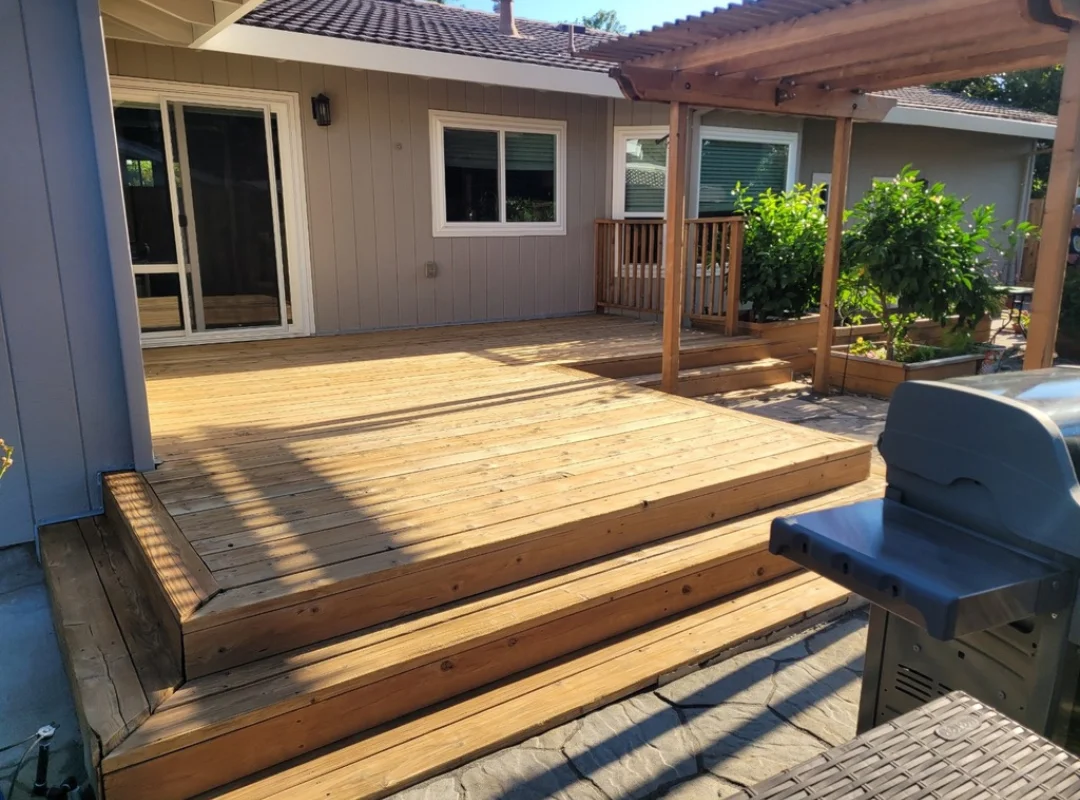
For most mold and mildew jobs, these are the things that are needed:
- Spray bottle or a garden pump sprayer
- A soft-bristle brush
- A stiff brush for heavier buildup
- A garden hose or access to a pressure washer
- Cleaning solution
For the cleaning solution itself, there are many options. A bleach solution made with household bleach and warm water is the most common choice for general mildew stains and surface mold.
A ratio of 1 cup of chlorine bleach (sodium hypochlorite as the active ingredient) per gallon of warm water works well for most situations.
For black mold or deeper staining that has worked into the oxalic acid, wood bleach, or grain, a stronger option is available that brightens and cleans simultaneously without damaging the wood fibers. Both products are readily available at big box stores.
Read labels carefully because some formulations are not safe for use near plants or on certain treated wood types.
Staying on top of mold and mildew removal directly impacts the life of your deck. Find out how long a wood deck lasts and what maintenance habits keep it looking great for years.
Step-by-Step: How to Clean Mold & Mildew From Wood
Start by clearing the area and moving furniture, planters, and anything else off the surface you are treating.
- Wet the surrounding vegetation with a garden hose before applying any cleaning solution.
- Mix your bleach solution in a bucket or spray bottle
- For a soft-bristle brush on decking or fence boards, apply the solution generously to the mold area
- Let it dwell for 10-15 minutes
- Use a stiff brush for heavily colonized areas with green mold or stubborn mildew.
- Scrub the entire wood surface methodically
- Pay particular attention to any dark or discolored patches
- Rinse thoroughly with a garden hose or pressure washer
- Keep the pressure moderate, around 1,200 to 1,500 PSI
- Always hold the nozzle at least 12 inches from the surface
Keep in mind that too much pressure raises the wood grain aggressively and can drive water deep into the wood, which creates new conditions for mildew growth later.
For deep mildew stains or persistent black mold that the bleach solution did not fully lift, apply oxalic acid or wood bleach (according to the product instructions). These are particularly useful on older treated wood where tannins and iron staining have combined with mold to create complex discoloration.
If mold damage has gone too far and you’re considering a full rebuild, explore the basics of building a wooden retaining wall as a durable option for your outdoor space.
When to Use Oxalic Acid Instead of Bleach
Household bleach handles most mildew stains and surface mold without issue. But it is not the right tool for every job. Always hire a professional for these kinds of tasks because they know how to do it safely and properly.
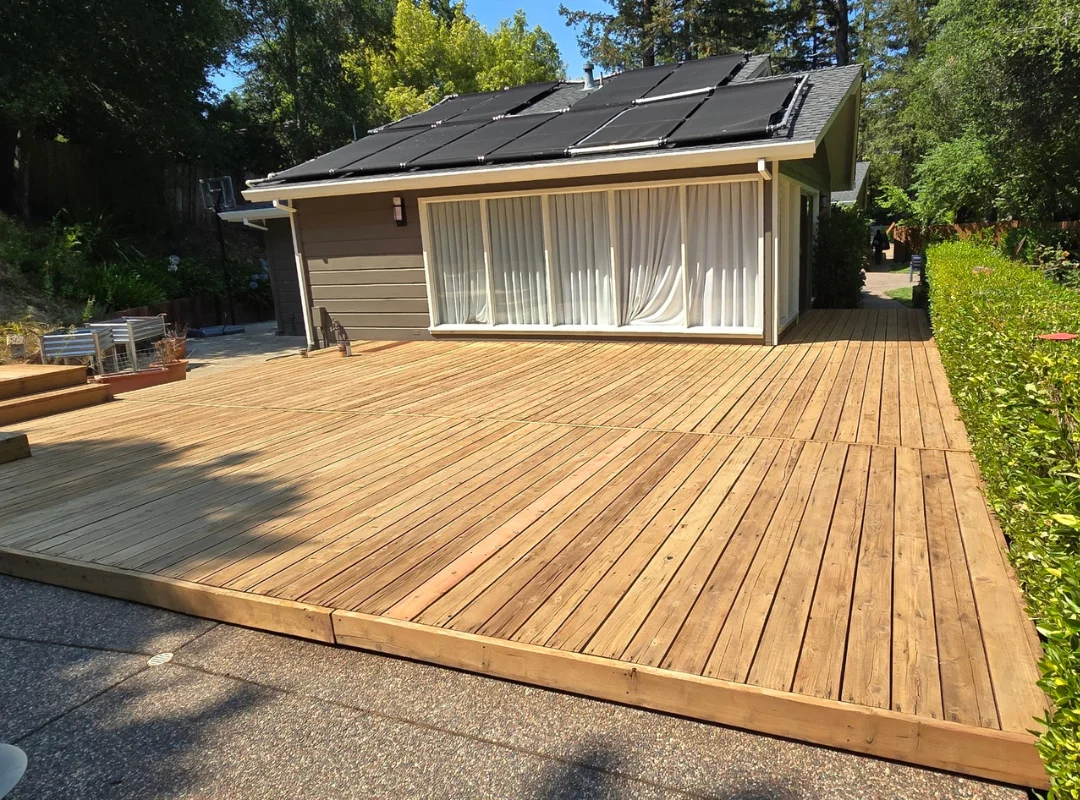
Wood bleach containing oxalic acid is the better choice when the wood surface has:
- Gray weathering
- Rust stains from fasteners
- Deep tannin discoloration is layered under the mold area
Oxalic acid works by reacting chemically with the compounds, causing the staining. It does not just bleach them visually but breaks them down. The result is a more even base that accepts stains far more uniformly. It also does less damage to the cellular structure of the wood than repeated applications of sodium hypochlorite-based cleaners.
A Clean Surface Is a Stain-Ready Surface
Remove mildew. Kill mold. Rinse, dry, and then stain.
That sequence is the difference between a finish that lasts years and one that fails in a single season. Again, we recommend you hire professionals for these jobs because they know what cleaners are right and what the right methods are to do it.
Ready for a Fresh Finish? Call FCR Fence & Deck
If your deck, fence, or arbor needs more than a scrub — or if you want the job done right without the afternoon of labor — FCR Fence & Deck is ready to take it on.
From stripping mildew stains and treating black mold to applying a professional-grade finish, we handle every step.
FCR Fence & Deck offers Custom Iron Fabrication, Fencing & Gates, Wood & Composite Decking, Arbor & Trellis, Retaining Walls, Staining & Restoration, and Chain Link Fencing.
Call us today and get your outdoor living spaces looking their best again.
Frequently Asked Questions
1. Can I stain wood without removing mold and mildew first?
No — and it is a costly shortcut. Applying stain over mildew growth or mold spores means the stain bonds to the contamination rather than the wood surface.
2. What is the best cleaning solution for mold on wood before staining?
For general mold and surface mildew stains, a bleach solution made with 1 cup of household bleach/gallon of warm water works well for most types of wood. For black mold that is heavy gray weathering or tannin staining, wood bleach with oxalic acid is a stronger option.
3. Is a pressure washer safe to use on wood decks and fences?
Yes, a pressure washer is safe with care. Keep the pressure between 1,200 and 1,500 PSI and hold the nozzle at least 12 inches from the surface. Too much pressure raises the grain and can force water deep into the wood. After pressure washing, always allow sufficient drying time before applying any stain.
4. Does FCR Fence & Deck offer staining and mold removal services in California?
Yes. FCR Fence & Deck serves customers throughout California and specializes in wood restoration, including surface prep and professional staining and restoration. Does the deck have surface mildew stains or deep black mold penetration? We use the right cleaning solution and application method for your wood type and condition.
5. How long should wood dry after cleaning before I restain it?
At a minimum, 48 hours in dry and warm conditions with direct sunlight. In humid or overcast weather, 72 hours is the safer target. The most reliable method is to use a moisture meter and confirm the wood reads below 15% moisture content before applying stain.