Best Decking for Pool Surrounds

When choosing the best decking for pool surrounds, the right option depends on some factors, such as:
  1. How hot does the surface get?
  2. How slippery it becomes when wet.
  3. How much maintenance does it require?
  4. How well does it fit your backyard style?
For many homeowners, the best pool deck material options are natural stone, concrete pavers, composite decking, and well-finished concrete, as they balance safety, comfort, durability, and appearance.
It affects how comfortable your bare feet feel on hot summer days, how safe your family is around water, and how attractive your surroundings look. That is why the best option you have is to work with a professional.
Retaining Wall Drainage Requirements
Best Decking For Pool Surrounds Hercules

What to Look for in a Pool Deck Material

Before you compare specific pool deck material options, you need to know what actually matters in daily use.
A strong pool deck material should:
  • Stay cool as much as possible in strong heat.
  • Offer grip when the surface gets wet.
  • Resists the water and chemicals.
  • Require low maintenance.
  • Fit your home’s backyard design.
  • Works well for in-ground and above-ground pools.
This is where many homeowners make the wrong choice. They focus only on the material’s appearance, but the biggest issue often comes later when the deck becomes slippery, fades in the sun, or feels too hot on your feet.

Natural Stone for Deck Material

Natural stone is one of the most attractive choices for a pool deck because it offers texture, durability, and natural beauty. It also works well in luxury pool deck design plans where you want the deck to feel like part of a custom resort-style patio.
Popular stone choices include:
  • Travertine
  • Flagstone
  • Limestone
  • Bluestone
Among these, travertine is often considered one of the strongest options for decking pool surrounds. That is because it can stay cooler than many other materials, even in strong direct sunlight. In practical terms, that matters when you are walking barefoot from the water to the seating area.
Composite Pool Deck By FCR Fence & Deck

Concrete Pool Deck Options

A concrete pool deck remains one of the most common choices because it is durable, flexible in design, and often more affordable than premium pavers or natural stone. It also gives you a lot of freedom in designing the pool deck.
If your yard features sloped terrain that threatens the stability of your concrete slab or causes soil erosion near the water, building a wooden retaining wall can help secure the structural earth beneath your concrete pour. 
You can choose:
  • Standard concrete
  • Brushed or textured concrete
  • Colored concrete
  • Stamped concrete
A plain concrete pool deck works well if you want a clean and practical finish. It suits both modern and traditional homes and often pairs well with simple landscaping and clean lines.
On very hot summer days, darker finishes can hold heat and become uncomfortable for bare feet. It can also crack over time, especially if the ground shifts or the slab was not installed correctly.

Concrete Pavers & Brick Pavers

Concrete pavers are among the most practical pool deck material options because they are durable, easy to repair, and visually versatile. Instead of one solid slab, you get separate units in varying sizes, colors, and patterns.
That matters for two reasons:
  1. Pavers often handle ground movement better than a single large slab.
  2. If one section of the pool deck is damaged, you can replace individual pieces rather than redoing the entire pool deck.
Many homeowners also like concrete pavers because they fit a wide range of styles. You can choose:
  • Modern rectangular pavers
  • Textured pavers with a natural look
  • Larger format shapes for open layouts
  • Lighter tones that help the deck stay cool
The ability to use light colors is especially helpful around a pool, as lighter shades generally absorb less heat than darker ones.
Best Pool Deck Materials

Best Pool Deck Choices for an Inground Pool

The right choice often depends on your pool type.
For inground pools, natural stone, concrete pavers, and a well-designed concrete pool deck are often top choices because they provide a finished, built-in look.
For above-ground pools, raised structures are more common, which makes composite decking and wood decking more practical in many layouts. In those cases, the deck often serves as both an access area and a lounge, so comfort and durability matter even more.

Conclusion

The final decision should match how you actually use your pool and patio. If your deck gets full sun all day, heat becomes a greater concern. If you want a luxury finish, appearance matters more. If you want less work, follow this deck maintenance checklist.
Here is the simple breakdown:
  • Choose natural stone for a premium appearance and cooler comfort.
  • Choose concrete pavers for durability and easy repairs.
  • Choose a concrete pool deck for affordability and flexibility.
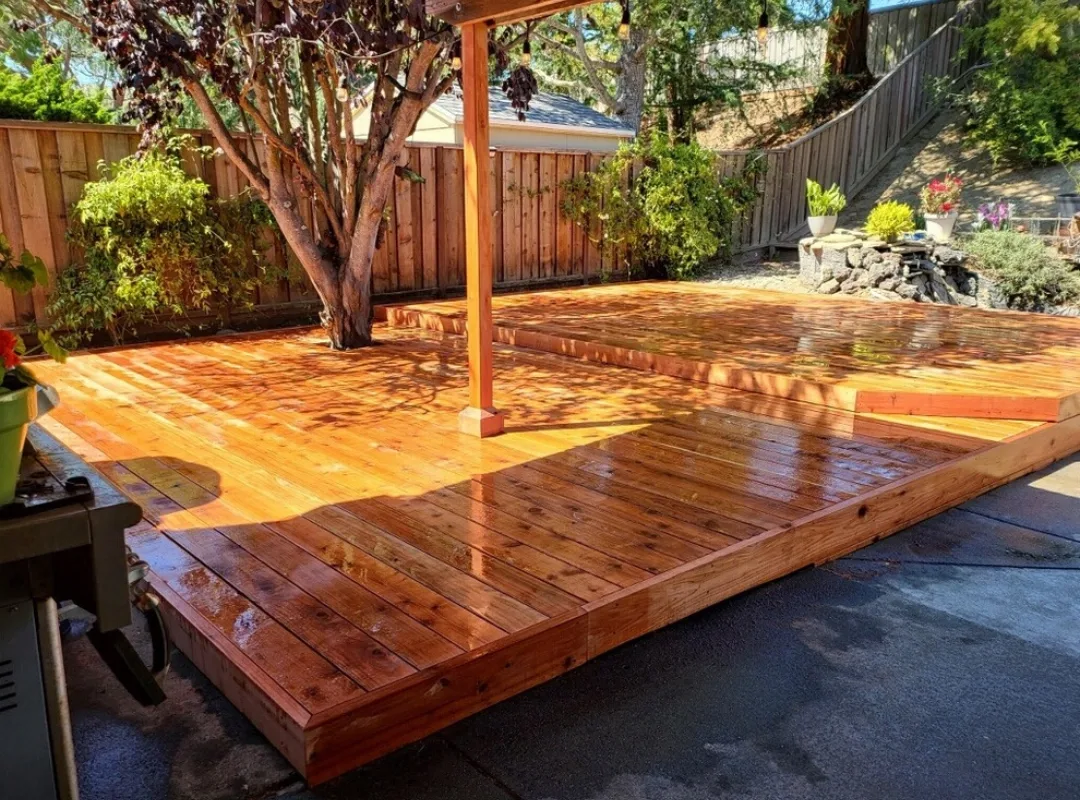
  • Choose composite decking if you want a raised deck with low maintenance.
  • Choose wood decking only if you are comfortable with regular upkeep.

Best Decking for Pool Surrounds by FCR Fence & Deck

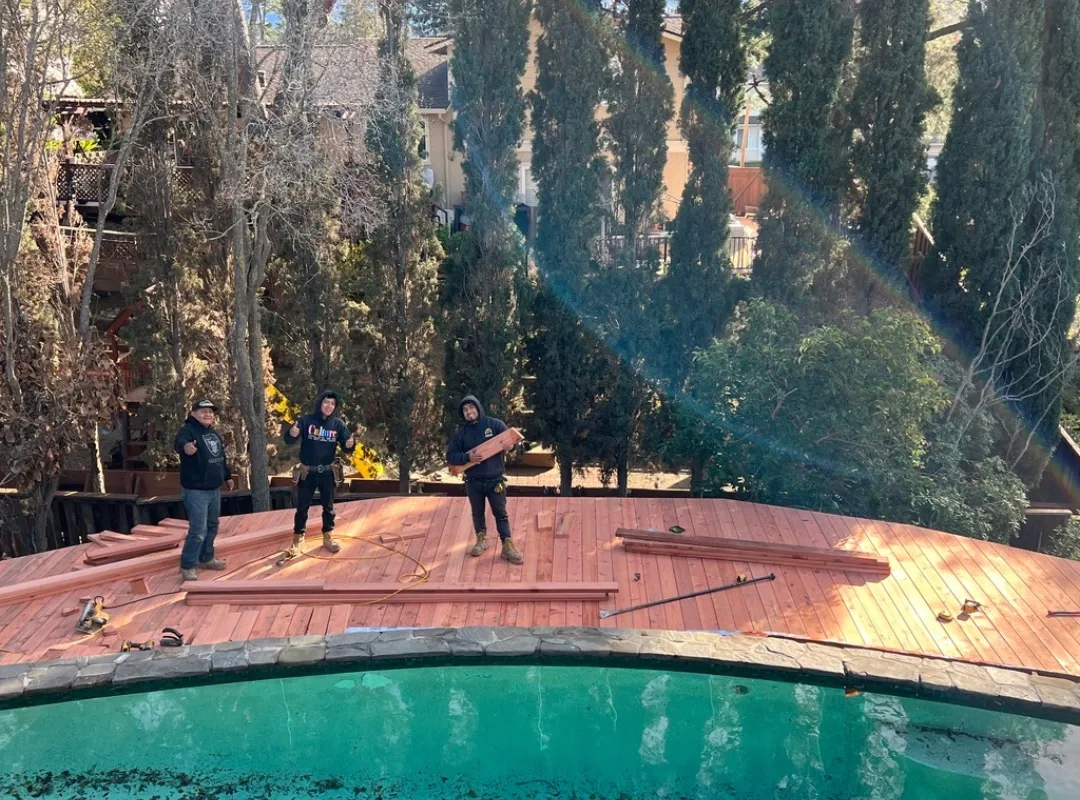
FCR Fence & Deck builds custom fences, pool fencing, decorative gates, decks, and outdoor living spaces that balance function and curb appeal. So, if you want full backyard seclusion or a clean, modern boundary, we can create structures that look intentional. Contact us today or schedule a free estimate.

FAQs

Concrete pool decks and concrete pavers usually provide the best long-term value. Concrete costs less upfront, while pavers cost more initially but make future repairs easier because individual sections can be replaced.

If you want a premium finish, cooler walking surfaces, and long-term durability, natural stone is often worth the investment. Travertine, in particular, balances comfort, appearance, and performance better than many alternatives.

Maintenance depends on the material. Composite decking needs occasional cleaning; concrete may require resealing every few years; and wood decking needs regular staining and sealing to protect against moisture and sun exposure. To keep synthetics looking pristine, here’s how you can extend the life of a composite deck with proper scrubbing routines.

Natural stone and concrete pavers generally offer the longest lifespan when installed correctly. Both resist heavy foot traffic well, and pavers provide the added advantage of replacing damaged sections without rebuilding the entire deck.

Yes. In most cases, you can replace the surrounding pool deck without affecting the pool structure. The best replacement material depends on your budget, existing layout, drainage, and overall backyard design.